
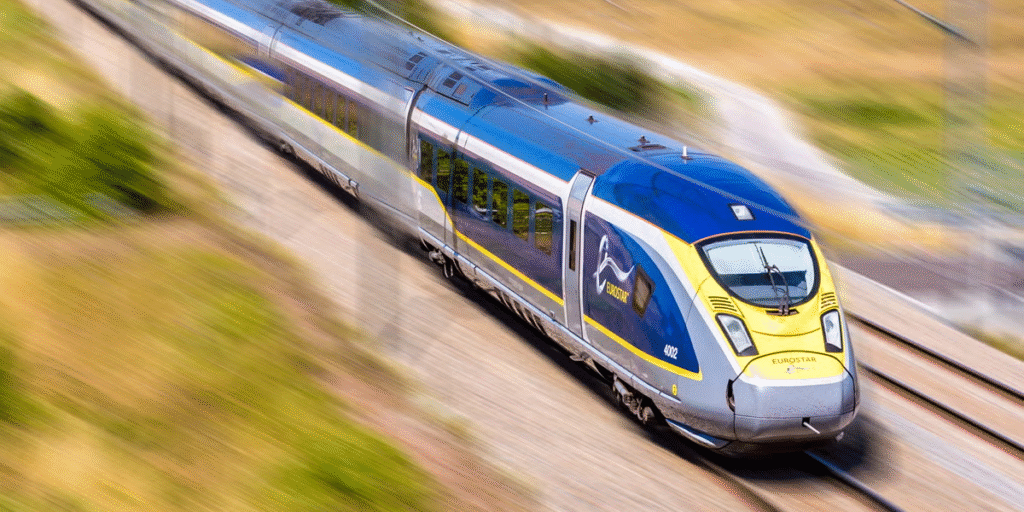
There is something undeniably magical about hopping on a train in the heart of London, settling into your seat with a coffee, and stepping out just a couple of hours later right in the middle of Paris, Brussels, or Amsterdam.
For over three decades, the Eurostar has linked Great Britain to mainland Europe via the Channel Tunnel. Despite major political shifts, Brexit, changing visa rules, and fluctuating economies, rail travel across the Channel is as popular as ever. People still flock to the Eurostar for a simple reason: it beats flying. You skip the dreaded airport security queues, avoid luggage stress, save money on airport transfers, and drastically lower your travel carbon footprint.
Whether you are planning a weekend break to Paris, a waffle-fueled trip through Brussels, or a scenic ride to Amsterdam, navigating international high-speed rail can feel a little different than a standard domestic train journey.
Here is your complete, practical, and fully updated guide to riding the Eurostar—covering everything from routes and ticket hacks to luggage limits and onboard survival tips.
Where Can You Go on the Eurostar?
The Eurostar network connects key capitals and vibrant cultural hubs across Western Europe. Direct routes start at London St Pancras International and run through the Channel Tunnel into continental Europe.
Core Direct Routes from London
- London to Paris (Gare du Nord): The classic journey. High-speed trains run up to 18 times a day, connecting two of the world’s greatest cities in roughly 2 hours and 15 minutes.
- London to Brussels (Midi / Zuid): Takes just 1 hour and 57 minutes—making it faster than a domestic trip from London to Manchester.
- London to Amsterdam (Centraal): Connects London directly to the Dutch capital in around 3 hours and 50 minutes, stopping at Rotterdam Centraal along the way.
- London to Lille (Europe): A quick 1 hour and 20 minute ride to northern France, which also serves as a major hub for connecting TGV trains across France.
Continental Connections
Eurostar also operates routes across mainland Europe (formerly branded as Thalys). You can book direct high-speed connections between Paris, Brussels, Antwerp, Rotterdam, Amsterdam, Dusseldorf, and Cologne, making multi-country itineraries simple to build.
+-----------------------------------------------------------------------------------------+
|                               EUROSTAR DIRECT ROUTE TIMINGS                             |
+-----------------------------------+-----------------------------------------------------+
| ROUTE                             | AVERAGE JOURNEY TIME                                |
+-----------------------------------+-----------------------------------------------------+
| London St Pancras ➔ Paris Nord   | 2 Hours 15 Minutes                                  |
| London St Pancras ➔ Brussels Midi | 1 Hour 57 Minutes                                   |
| London St Pancras ➔ Rotterdam     | 3 Hours 15 Minutes                                  |
| London St Pancras ➔ Amsterdam     | 3 Hours 50 Minutes                                  |
| Paris Nord ➔ Brussels Midi        | 1 Hour 20 Minutes                                   |
| Brussels Midi ➔ Amsterdam         | 2 Hours 15 Minutes                                  |
+-----------------------------------+-----------------------------------------------------+
Understanding the Three Travel Classes
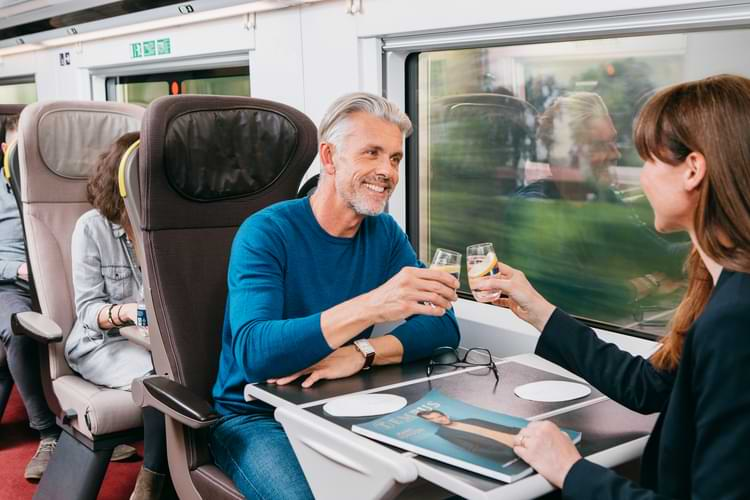
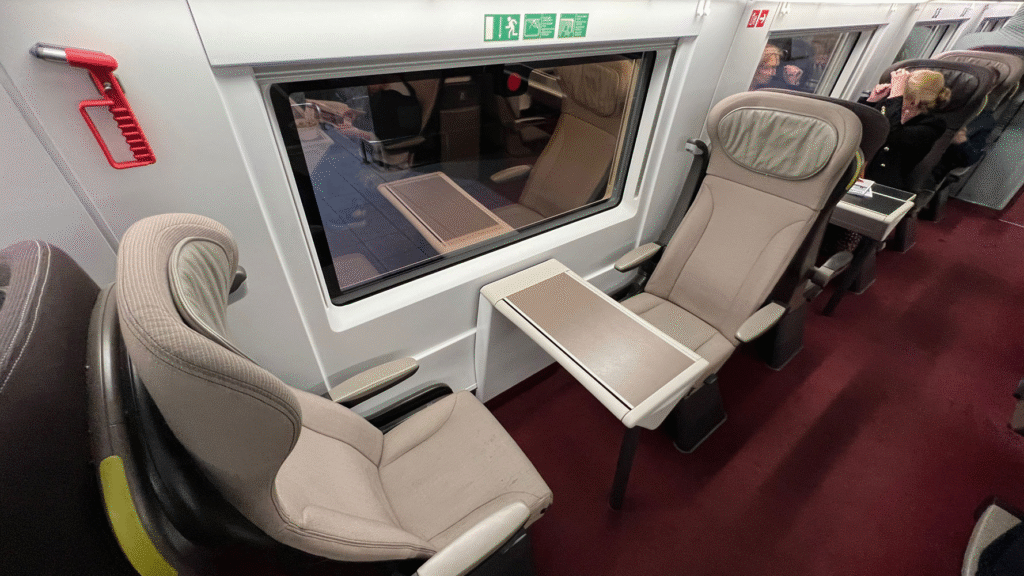
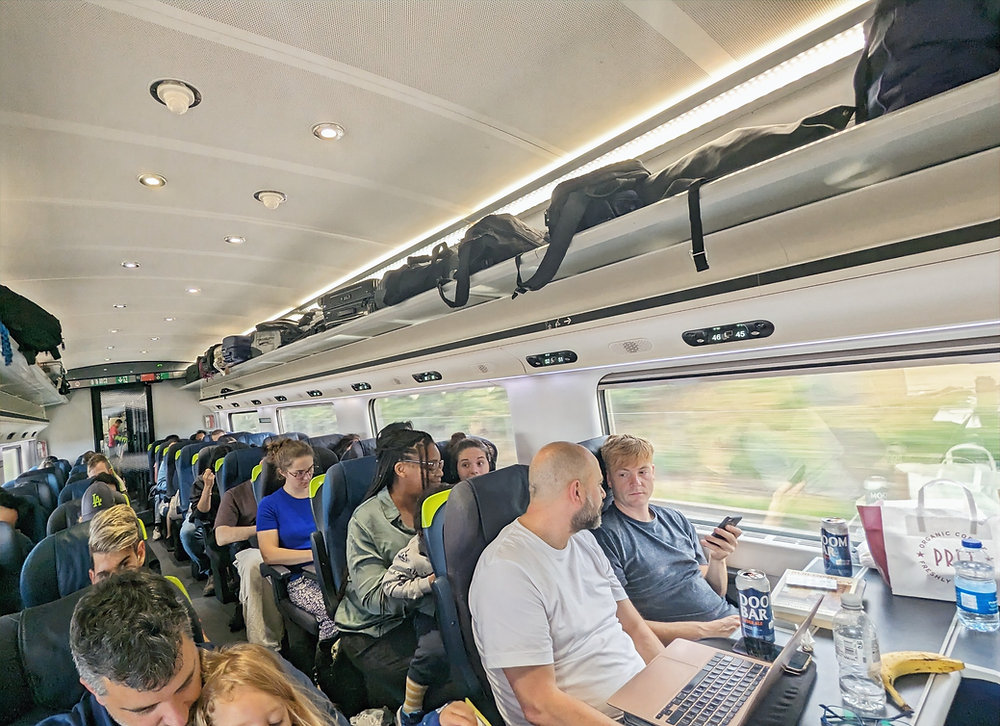
Eurostar offers three distinct travel tiers. Choosing the right one depends entirely on your budget, schedule, and how much comfort you want during the ride.
+-----------------------------------------------------------------------------------------+
|                                 EUROSTAR TRAVEL CLASSES                                 |
+---------------------+-------------------------+-----------------------------------------+
| CLASS               | LUGGAGE ALLOWANCE       | KEY PERKS & AMENITIES                   |
+---------------------+-------------------------+-----------------------------------------+
| Eurostar Standard   | 2 Bags + 1 Small Handbag| Free Wi-Fi, power sockets, access to    |
|                     |                         | the Cafe Metropole bar car.             |
| Eurostar Plus       | 2 Bags + 1 Small Handbag| Extra legroom, quieter carriages, a     |
|                     |                         | light meal & drinks served at seat.     |
| Eurostar Premier    | 3 Bags + 1 Small Handbag| Chef-curated hot meal, champagne, lounge|
|                     |                         | access, 15-min flexible check-in.       |
+---------------------+-------------------------+-----------------------------------------+
1. Eurostar Standard
The most popular choice for budget-conscious travelers. You get a comfortable seat, access to power outlets (fitting both UK 3-pin and European 2-pin plugs), free Wi-Fi, and access to the onboard café car (Café Métropole).
2. Eurostar Plus
Positioned as a premium economy experience, Plus gives you wider seats with extra legroom and a quieter carriage environment. On routes to and from London, it includes a light meal and drinks served directly to your seat. It is a fantastic option if you want to work or relax in peace.
3. Eurostar Premier
Designed for business travelers or those treating themselves to luxury. Premier ticket holders get maximum flexibility (easy refunds and exchanges), access to exclusive departure lounges in London, Paris, and Brussels, a three-course hot meal curated by top chefs, complimentary champagne, and an expedited 15-minute express check-in window.
Station Guides: What to Expect at the Hubs
Unlike standard domestic trains, catching a Eurostar means passing through security, border control, and passport checks before you board. Each station has its own quirks and personality.
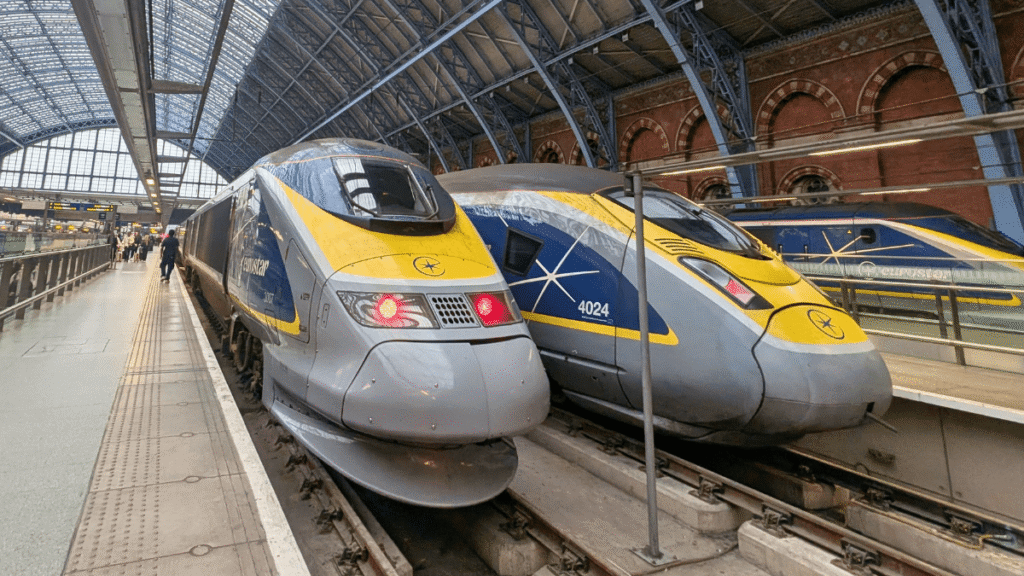
London St Pancras International
- Location: Central London, right next door to King’s Cross Station.
- Atmosphere: Beautifully restored Victorian architecture featuring stunning iron arches and high-end shopping.
- Pro Tip: Stock up on food before entering the departure lounge. St Pancras has incredible options like Fortnum & Mason, Pret A Manger, and local bakeries. Once you clear security into the departure hall, food options become limited and queues get long.
Paris Gare du Nord
- Location: 10th Arrondissement of Paris.
- Connecting Onward: Metro lines 4 and 5, as well as RER commuter trains (Lines B and D), run directly underneath the station.
- Pro Tip: Metro ticket queues at Gare du Nord are notoriously slow. Beat the crowds by purchasing a pack of Paris Metro tickets inside the Eurostar café car before your train arrives! Also, keep your belongings close—Gare du Nord is a bustling hub where pickpockets operate.
Amsterdam Centraal
- Location: Right in the center of Amsterdam, facing the canals.
- Finding the Terminal: The UK departure terminal is separated from standard platforms. Look for the signs marked “UK Terminal / Eurostar” at the far end of Platform 15.
- Pro Tip: Watch out for cyclists when exiting the station! In Amsterdam, cyclists have the absolute right of way, and tram traffic moves quickly outside the main doors.
Brussels Midi / Zuid
- Location: South of central Brussels, about a 20-minute walk or quick metro ride to the Grand Place.
- Pro Tip: The station area is well-policed, but like many large European stations, it can get quiet and feel sketchy late at night. Stick to well-lit areas inside the main concourse while waiting for your connections.
Luggage Rules: What Can (and Can’t) You Pack?
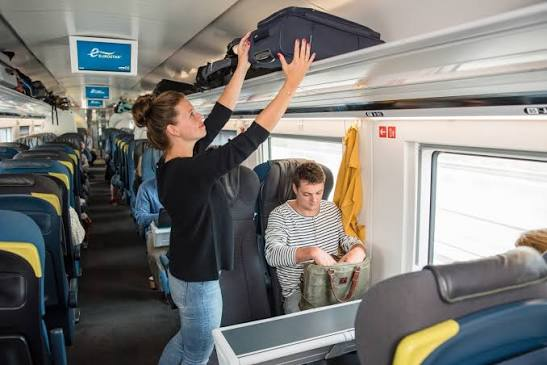
One of the biggest advantages of taking the train over flying is the generous luggage policy. There are no weight restrictions, no liquid limits, and no fees for checked bags.
Packing Allowances
- Standard & Plus Passengers: 2 large bags (up to 85 cm / 33.5 inches at their longest side) PLUS 1 small piece of hand luggage (like a backpack or laptop bag).
- Premier Passengers: 3 large bags PLUS 1 piece of hand luggage.
- Children (under 4): Travel free, but do not get a separate luggage allowance. Children aged 4–11 get the standard 2-bag allowance.
Liquids and Food
You can take full-size shampoo bottles, perfume, sunscreens, and as many bottles of water as you like. You are also welcome to bring your own meals, sandwiches, and snacks on board.
Alcohol Policy: You are allowed to bring a modest amount of alcohol for personal consumption—typically 1 bottle of wine/champagne or 4 cans of beer per person. Note that on specific dates (such as major sporting events or late-night party trains), Eurostar occasionally enforces “dry trains” where alcohol is not permitted. You will be notified via email if this applies to your journey.
Prohibited Items
Just like air travel, weapons, explosives, flammables, and illegal substances are strictly banned.
Important Note on Food (Post-Brexit Rules): Post-Brexit regulations strictly prohibit bringing meat, dairy products, or fresh animal products from the UK into the EU (and vice versa). While security officers rarely search personal sandwiches, carrying unsealed fresh ham, cheese, or fresh meat products can technically get your food confiscated at border control. Pack commercial snacks or plant-based items if you want to play it 100% safe.
Bicycles on Eurostar:
Bringing a full-sized bicycle on the Eurostar requires booking a dedicated luggage space in advance, disassembling the bike, and placing it in a protective travel bag. If you have a folding bike (like a Brompton), you can bring it aboard as one of your standard luggage items, provided it stays under 85 cm when folded and is kept inside a protective cover.
Essential Step-by-Step Boarding Process
Because the UK is not part of the Schengen Area, border checks happen prior to departure. Follow this smooth sequence to ensure you make your train without stress.
1.Arrive 45–60 Minutes Early:Don’t cut it too close – check-in gates close strictly..
Standard and Plus ticket holders should arrive at the station at least 45 to 60 minutes before departure. During peak summer holidays or festive weekends, aim for 75–90 minutes to account for longer passport lines.
2.Scan Your Ticket at the Gate:Keep your digital or printed ticket ready..
Scan the QR code on your phone or printed ticket at the automatic ticket barriers to enter the security hall.
3.Pass Through Luggage Security:No 100ml liquid limits here!.
Place your bags, coats, and metallic items onto the X-ray conveyer belt. Unlike airports, you can keep liquids inside your bag, and you don’t need to take off your shoes unless requested.
4.Clear Passport Control:You clear both countries in one place..
You will pass through both UK exit checks and European entry checks (or vice versa) side-by-side. Make sure your passport is valid for at least 3 months beyond your planned return date and has been issued within the last 10 years.
5.Wait in the Departure Lounge:Restrooms and seating are available..
Relax in the departure lounge until your train platform is called (usually 15–20 minutes before departure). Boarding closes 2 minutes prior to the exact departure time.
Insider Hacks for a Stress-Free Ride
To get the absolute best out of your Eurostar experience, keep these practical tips in mind:
1. Book Early for Massive Savings
Eurostar ticket pricing is dynamic—just like airlines. The cheapest tickets drop up to 90 to 120 days in advance. Standard class tickets from London to Paris can start as low as £39 ($50) one way if booked early, but can skyrocket to well over £200 if bought at the last minute.
2. Travel on Mid-Week Off-Peak Hours
Tuesdays and Wednesdays are almost always the cheapest days to ride. Mid-morning and early afternoon trains (between 10:00 AM and 2:30 PM) offer significantly lower fares compared to peak morning rush hours or Friday evening getaway trains.
3. Bring a Water Bottle and Power Bank
While Eurostar carriages feature standard UK and EU power sockets at every seat row, Wi-Fi performance and mobile data signals drop while passing through the Channel Tunnel and rural stretches of countryside. Download your movies, podcasts, or work files before you depart. Also, bring a reusable water bottle—there are no refill fountains inside the train cars!
4. Keep an Eye on Your Luggage
While train travel is generally very safe, thieves sometimes target luggage racks located near the car exit doors during station stops. Keep smaller bags at your seat, and if you store a large suitcase in the shared rack at the end of the carriage, try to pick a seat where you can keep a loose eye on it.
5. Take Advantage of Ticket Exchanges
Did your plans change? Eurostar allows ticket exchanges up to 1 hour before departure. You won’t pay an exchange fee, though you will have to pay any price difference between your old ticket and the new fare.